Cell Concentration Calculator
Calculate cell concentration, density, and viability for cell culture and research applications
Count cells in 4 corner squares (1mm² each) for best accuracy
Enter 2 for 1:1 dilution, 10 for 1:9 dilution, etc.
Results
Understanding Cell Concentration
Cell concentration (also called cell density) is the number of cells per unit volume, typically expressed as cells/mL. Accurate cell concentration measurement is essential for cell culture, experimental reproducibility, flow cytometry, and many other applications in cell biology.
Hemocytometer Method
Standard Formula
Cells/mL = (Total cells counted / Number of squares) × Dilution factor × 10⁴
The factor 10⁴ comes from the hemocytometer chamber specifications:
- Each large square = 1mm × 1mm = 1mm²
- Chamber depth = 0.1mm
- Volume per large square = 1mm² × 0.1mm = 0.1mm³ = 0.0001mL = 10⁻⁴ mL
- Therefore, multiply by 10⁴ to convert to cells/mL
With Viability (Trypan Blue)
Total Concentration = [(Viable + Dead) / Squares] × Dilution × 10⁴
Viable Concentration = (Viable cells / Squares) × Dilution × 10⁴
Viability (%) = (Viable cells / Total cells) × 100
Typical Cell Concentrations
| Application | Typical Range | Notes |
|---|---|---|
| Cell culture seeding | 1×10⁴ - 1×10⁵ cells/mL | Depends on cell type and plate size |
| Exponential growth phase | 5×10⁵ - 2×10⁶ cells/mL | Optimal for most experiments |
| Flow cytometry | 1×10⁶ - 1×10⁷ cells/mL | Higher for sorting |
| Cryopreservation | 1×10⁶ - 1×10⁷ cells/mL | In 10% DMSO or serum |
| Bacterial culture (E. coli) | 1×10⁸ - 1×10⁹ cells/mL | Stationary phase |
| Yeast culture | 1×10⁷ - 5×10⁷ cells/mL | Exponential phase |
| Blood (leukocytes) | 4×10⁶ - 1×10⁷ cells/mL | Physiological range |
| Transfection/transduction | 5×10⁵ - 2×10⁶ cells/mL | 70-90% confluency |
Cell Viability Standards
Excellent (> 95%)
Ideal for all experiments, cell banking, and therapeutic applications. Cells are healthy and actively dividing.
Good (90-95%)
Acceptable for most experiments. Monitor culture conditions and consider subculturing soon.
Marginal (80-90%)
Suboptimal. Use with caution. Investigate culture conditions, media quality, or contamination.
Poor (< 80%)
Not recommended for experiments. Discard or troubleshoot immediately. May indicate contamination or stressed cells.
Counting Best Practices
Sample Preparation
- • Mix cell suspension thoroughly before sampling
- • Ensure single-cell suspension (no clumps)
- • Dilute if necessary to get 20-50 cells per square
- • Work quickly to prevent settling
Counting Rules
- • Count cells touching the top and left borders (include)
- • Do not count cells touching bottom and right borders (exclude)
- • Count at least 4 squares for statistical accuracy
- • Aim for 100-400 total cells counted
Quality Control
- • Count duplicate samples for accuracy
- • Check chamber is clean and dry before loading
- • Use proper volume (10µL for most chambers)
- • Count within 5 minutes to avoid settling/evaporation
Alternative Counting Methods
Automated Cell Counters
Advantages:
- • Fast and reproducible
- • Reduced user bias
- • Size distribution analysis
Examples: Countess, TC20, Vi-CELL
Flow Cytometry
Advantages:
- • Absolute counting with beads
- • Multiparameter analysis
- • Viability with live/dead stains
Most accurate for complex populations
Spectrophotometry (OD600)
Use for:
- • Bacterial cultures
- • Yeast suspensions
- • High-throughput screening
Requires calibration curve
Coulter Counter
Use for:
- • High-throughput counting
- • Particle size analysis
- • Blood cell counts
Based on electrical impedance
Common Applications
- Cell Culture Maintenance: Determine seeding density for subculturing and expansion
- Experimental Setup: Ensure consistent cell numbers across replicates and conditions
- Flow Cytometry: Prepare samples at optimal concentration for acquisition
- Drug Testing: Calculate IC50 and dose-response curves with accurate cell numbers
- Transfection: Optimize transfection efficiency with proper cell density
- Cell Banking: Prepare cryovials with consistent viable cell counts
- Quality Control: Monitor culture health and contamination
Troubleshooting
- Cells too dense: Dilute sample 1:2 or 1:10 and multiply result by dilution factor
- Cells too sparse: Count more squares or concentrate sample by centrifugation
- Clumps present: Pipette more vigorously or use trypsin/dissociation buffer
- Low viability: Check media quality, temperature, contamination, or passage number
- Inconsistent counts: Ensure thorough mixing and count immediately after loading
- Cells settling: Work quickly; trypan blue increases density and accelerates settling
Related Calculators
References
- Strober, W. (2015). "Trypan Blue Exclusion Test of Cell Viability." Current Protocols in Immunology, 111, A3.B.1-A3.B.3.
- Cadena-Herrera, D., et al. (2015). "Validation of three viable-cell counting methods: Manual, semi-automated, and automated." Biotechnology Reports, 7, 9-16.
- Louis, K. S., & Siegel, A. C. (2011). "Cell viability analysis using trypan blue: manual and automated methods." Methods in Molecular Biology, 740, 7-12.
- Phelan, M. C., & Lawler, G. (2001). "Cell counting." Current Protocols in Cytometry, Appendix 3, Appendix 3A.
- Chan, L. L., et al. (2013). "A novel image-based cytometry method for autophagy detection in living cells." Autophagy, 9(9), 1371-1382.
Recommended Calculator
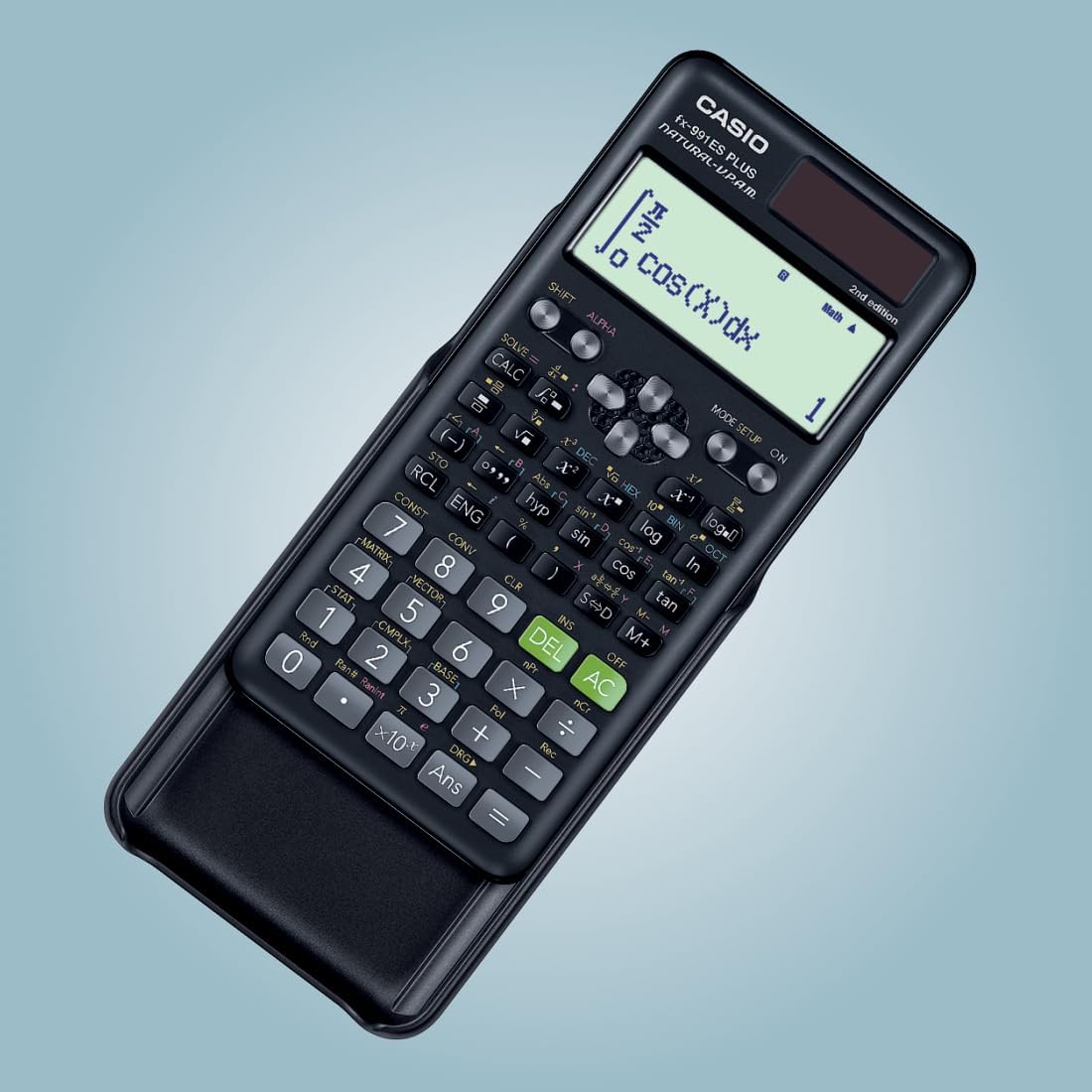
Casio FX-991ES Plus
The professional-grade scientific calculator with 417 functions, natural display, and solar power. Perfect for students and professionals.
View on Amazon