Species Density Calculator
Calculate population density and size using various ecological survey methods
Optional - for estimating total population
Results
Understanding Species Density
Species density (or population density) is the number of individuals of a species per unit area. It is a fundamental ecological metric used to understand population dynamics, habitat quality, species interactions, and conservation needs.
Sampling Methods
1. Quadrat Sampling
Formula: Density = Total Individuals / (Number of Quadrats × Quadrat Area)
Population Estimate: N = Density × Total Area
Used for sessile or slow-moving organisms (plants, invertebrates). Random or systematic placement of fixed-area plots. Best for uniform habitats.
2. Mark-Recapture (Lincoln-Petersen Index)
Formula: N = (M × C) / R
Where:
- N = Estimated population size
- M = Number initially marked
- C = Total captured in second sample
- R = Number of marked individuals recaptured
Assumptions: Closed population, marks don't affect survival, random mixing, equal catchability
3. Line Transect (Strip Census)
Formula: Density = Individuals / (Transect Length × 2 × Strip Width)
Observer walks along line, counting all animals within strip width on each side. Used for mobile animals in open habitats. Strip width should match detection distance.
4. Direct Count (Total Census)
Formula: Density = Total Count / Survey Area
Count all individuals in defined area. Feasible only for small areas, large conspicuous animals, or when technology (aerial surveys, camera traps) enables complete counts.
Typical Density Ranges
| Species/Group | Typical Density | Context |
|---|---|---|
| Large predators (wolves, tigers) | 0.01 - 0.1 per km² | Very low - large territories |
| Large herbivores (deer, elk) | 1 - 20 per km² | Varies with habitat quality |
| Small mammals (mice, voles) | 50 - 500 per ha | High - small territories |
| Songbirds (breeding pairs) | 2 - 50 per ha | Forest/woodland habitats |
| Insects (grasshoppers) | 100 - 1000 per m² | Grassland peak densities |
| Trees (mature forest) | 200 - 1000 per ha | Depends on successional stage |
| Soil microarthropods | 10⁴ - 10⁶ per m² | Extremely high densities |
Types of Density Measures
Crude Density
Number of individuals per total area, including unsuitable habitat. Easier to measure but may underestimate true density in usable habitat.
Ecological Density
Number of individuals per unit of suitable habitat only. More biologically meaningful but requires habitat mapping. Higher than crude density.
Factors Affecting Density
Biotic Factors
- • Food availability and quality
- • Predation pressure
- • Competition (intra- and interspecific)
- • Disease and parasites
- • Reproductive rate and success
- • Social behavior and territoriality
Abiotic Factors
- • Climate and weather patterns
- • Habitat structure and complexity
- • Water availability
- • Soil quality (for plants)
- • Shelter and nesting sites
- • Human disturbance
Sampling Considerations
Sample Size
Larger samples increase precision. Aim for 20-30 quadrats minimum. For mark-recapture, both marked and recaptured samples should be > 30 for reliable estimates.
Randomization vs. Stratification
Random sampling avoids bias but may miss rare habitats. Stratified sampling (proportional allocation across habitat types) improves estimates in heterogeneous areas.
Timing and Replication
Sample during appropriate season (breeding, non-migratory period). Multiple surveys across time improve accuracy and capture temporal variation.
Applications in Conservation and Management
- Population Monitoring: Track changes over time to detect declines or recovery
- Habitat Assessment: Determine if habitat can support viable populations
- Conservation Status: Inform IUCN Red List assessments and protection priorities
- Harvest Management: Set sustainable hunting/fishing quotas based on population estimates
- Impact Assessment: Evaluate effects of development, disturbance, or management actions
- Reintroduction Success: Monitor establishment and spread of reintroduced species
- Invasive Species: Track population growth and distribution of invasives
- Carrying Capacity: Estimate maximum sustainable population for an area
Challenges and Limitations
- Detection Probability: Not all individuals are observed; varies with species behavior, habitat, and observer skill
- Spatial Heterogeneity: Density varies across landscape; localized sampling may not represent entire population
- Temporal Variation: Populations fluctuate seasonally and annually; single surveys provide snapshot only
- Mark-Recapture Violations: Marks may affect behavior, marked animals may not mix randomly, population may not be closed
- Edge Effects: Quadrats near boundaries may include/exclude individuals based on movement
- Cryptic Species: Similar-looking species may be miscounted or lumped together
- Cost and Effort: Intensive sampling required for rare or mobile species; tradeoff between precision and resources
Advanced Techniques
Distance Sampling
Measures perpendicular distance of detected animals from transect line. Fits detection function to correct for declining detectability with distance. More sophisticated than strip transects.
Camera Trap Studies
Non-invasive density estimation for elusive mammals. Uses capture-recapture framework with individually recognizable animals (stripe patterns, etc.) or spatially explicit models.
Occupancy Modeling
Estimates proportion of area occupied, accounting for imperfect detection. Doesn't give absolute density but indicates distribution and relative abundance changes.
Aerial Surveys
Direct counts or strip transects from aircraft. Efficient for large areas and open habitats. Drones (UAVs) increasingly used for detailed surveys and thermal imaging.
Related Calculators
References
- Krebs, C. J. (1999). "Ecological Methodology." 2nd Edition, Benjamin Cummings.
- Sutherland, W. J. (2006). "Ecological Census Techniques: A Handbook." 2nd Edition, Cambridge University Press.
- Buckland, S. T., et al. (2001). "Introduction to Distance Sampling." Oxford University Press.
- Seber, G. A. F. (1982). "The Estimation of Animal Abundance and Related Parameters." 2nd Edition, Griffin.
- Williams, B. K., et al. (2002). "Analysis and Management of Animal Populations." Academic Press.
Recommended Calculator
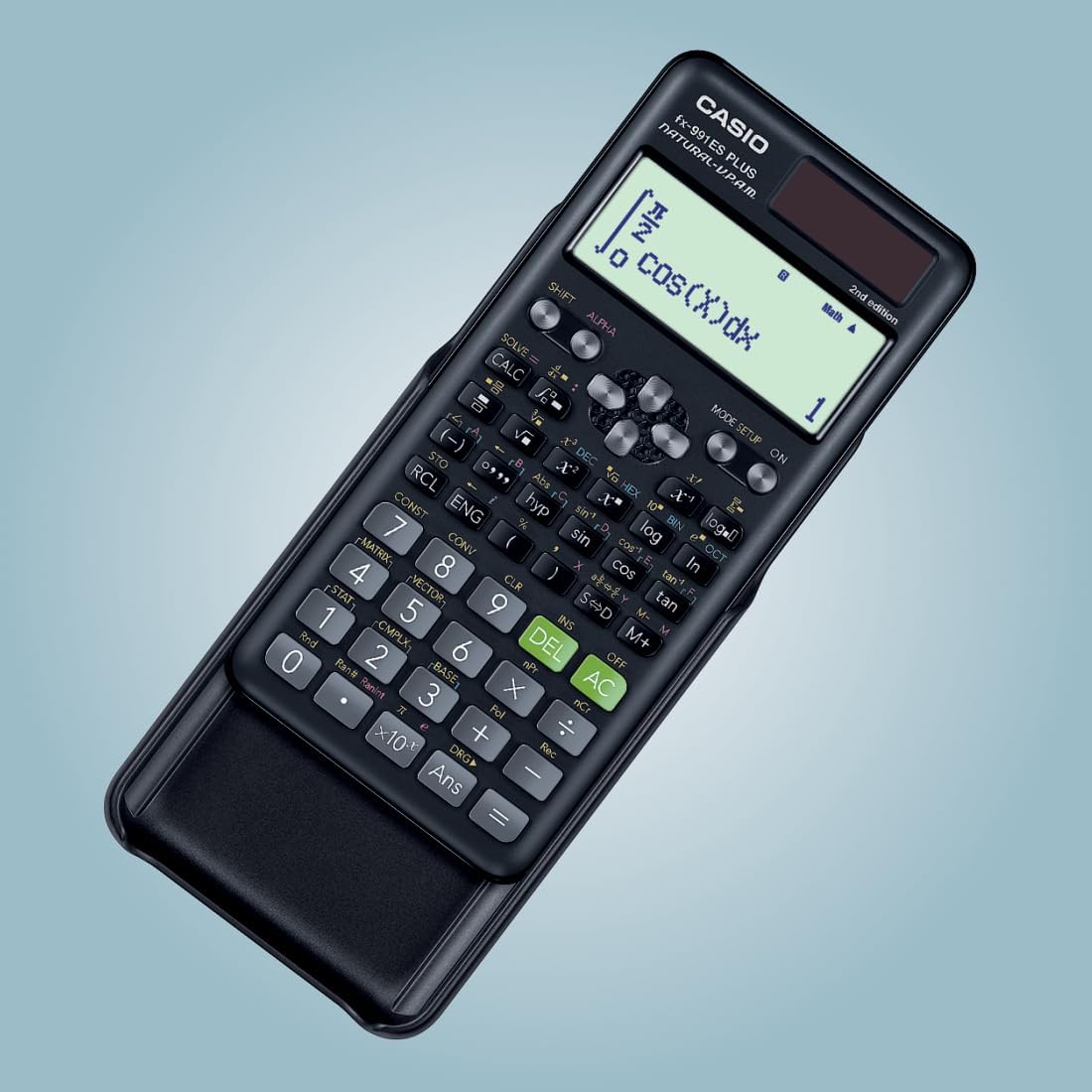
Casio FX-991ES Plus
The professional-grade scientific calculator with 417 functions, natural display, and solar power. Perfect for students and professionals.
View on Amazon