Calibration Curve Calculator
Create calibration curves and calculate unknown concentrations from standard solutions in analytical chemistry
Standard Data Points
Calibration Curve Equation
Slope (m)
Intercept (b)
R² (Correlation)
Calibration Data & Residuals
| Point | X | Y (Measured) | Y (Predicted) | Residual |
|---|
Calculate Unknown Concentration
Calculated Concentration:
Statistical Analysis
Number of Points:
Standard Error:
Sum of Squared Residuals (SSR):
Mean Y Value:
What is a Calibration Curve?
A calibration curve (also called a standard curve) is a method used in analytical chemistry to determine the concentration of an unknown substance by comparing it to a set of standard samples of known concentration. The relationship between concentration and instrument response is typically linear, following the equation y = mx + b, where y is the measured response, x is the concentration, m is the slope (sensitivity), and b is the y-intercept (blank response).
Linear Regression Equation:
y = mx + b
- • y = Measured response (absorbance, signal intensity, etc.)
- • x = Concentration of analyte
- • m = Slope (sensitivity of the method)
- • b = Y-intercept (background signal)
R² (Coefficient of Determination)
The R² value measures how well the linear model fits your data. It ranges from 0 to 1:
- R² = 1.0: Perfect linear correlation
- R² ≥ 0.995: Excellent fit (typical requirement for analytical methods)
- R² ≥ 0.99: Good fit (acceptable for most applications)
- R² < 0.99: Poor fit (data may not be linear or have outliers)
How to Use This Calculator
- Prepare Standards: Create a series of standard solutions with known concentrations
- Measure Response: Measure the instrument response for each standard (e.g., absorbance, fluorescence intensity)
- Enter Data: Input your concentration (X) and response (Y) values into the calculator
- Calculate Curve: Click "Calculate Calibration Curve" to perform linear regression
- Check R²: Verify that R² ≥ 0.99 for acceptable linearity
- Find Unknown: Enter the measured response of your unknown sample to calculate its concentration
Important Tips:
- • Use at least 5-6 standard points for reliable calibration
- • Standards should bracket the expected concentration of unknowns
- • Check residuals for outliers or systematic deviations
- • Prepare fresh calibration curves regularly (daily or per analytical session)
Worked Example: Protein Quantification (Bradford Assay)
Standard Data:
| Concentration (µg/mL) | Absorbance (595 nm) |
|---|---|
| 0 | 0.000 |
| 5 | 0.102 |
| 10 | 0.215 |
| 15 | 0.318 |
| 20 | 0.425 |
| 25 | 0.531 |
Step 1: Calculate Slope and Intercept
Using linear regression:
• Slope (m) = 0.0212 AU/(µg/mL)
• Intercept (b) = 0.0013 AU
Step 2: Regression Equation
y = 0.0212x + 0.0013
Step 3: Check R²
R² = 0.9998 ✓ (Excellent correlation)
Step 4: Calculate Unknown
Unknown sample absorbance = 0.356 AU
Concentration = (0.356 - 0.0013) / 0.0212 = 16.73 µg/mL
Result: The unknown protein sample has a concentration of 16.73 µg/mL
Common Applications
UV-Vis Spectroscopy
Quantify analytes based on light absorption at specific wavelengths. Common for protein assays (Bradford, BCA, Lowry), DNA/RNA quantification, and colorimetric assays.
Chromatography (HPLC/GC)
Determine concentrations from peak areas or heights. Essential for pharmaceutical analysis, environmental monitoring, and food testing.
Immunoassays (ELISA)
Measure protein concentrations, antibody titers, or biomarker levels using enzyme-linked detection and colorimetric or fluorescent readouts.
Atomic Absorption (AAS)
Quantify metal concentrations in samples. Used in environmental analysis, clinical chemistry, and quality control of materials.
Fluorometry
Measure fluorescence intensity for highly sensitive detection of nucleic acids (Qubit), proteins, and other fluorescent analytes at low concentrations.
Clinical Chemistry
Quantify glucose, cholesterol, enzymes, and other blood chemistry parameters using automated analyzers and spectrophotometric methods.
Best Practices for Calibration Curves
Standard Preparation
- Use certified reference materials or high-purity standards
- Prepare standards in the same matrix as samples when possible
- Use fresh standards and avoid repeated freeze-thaw cycles
- Include a blank (zero concentration) to determine background signal
Curve Design
- Use at least 5-6 concentration levels (more for complex methods)
- Space standards evenly across the expected concentration range
- Ensure unknowns fall within the calibration range (no extrapolation)
- Run standards in duplicate or triplicate for better precision
Quality Control
- Check R² ≥ 0.99 (or ≥ 0.995 for critical applications)
- Examine residuals for outliers or systematic trends
- Include quality control samples at low, medium, and high concentrations
- Re-calibrate if QC samples fail acceptance criteria
- Document calibration curves in laboratory notebooks or LIMS
Troubleshooting Poor Linearity
- Check for instrument drift or malfunction
- Verify standard preparation and dilution accuracy
- Look for matrix effects or interferences
- Assess whether the concentration range exceeds the linear dynamic range
- Consider using weighted regression for heteroscedastic data
References
Calibration curve methodology is based on established analytical chemistry principles and regulatory guidelines:
Note: This calculator uses ordinary least squares (OLS) linear regression. For advanced applications requiring weighted regression, non-linear curves, or uncertainty analysis, consult specialized statistical software or analytical chemistry references. Always validate calibration curves according to your laboratory's quality assurance procedures and regulatory requirements.
Recommended Calculator
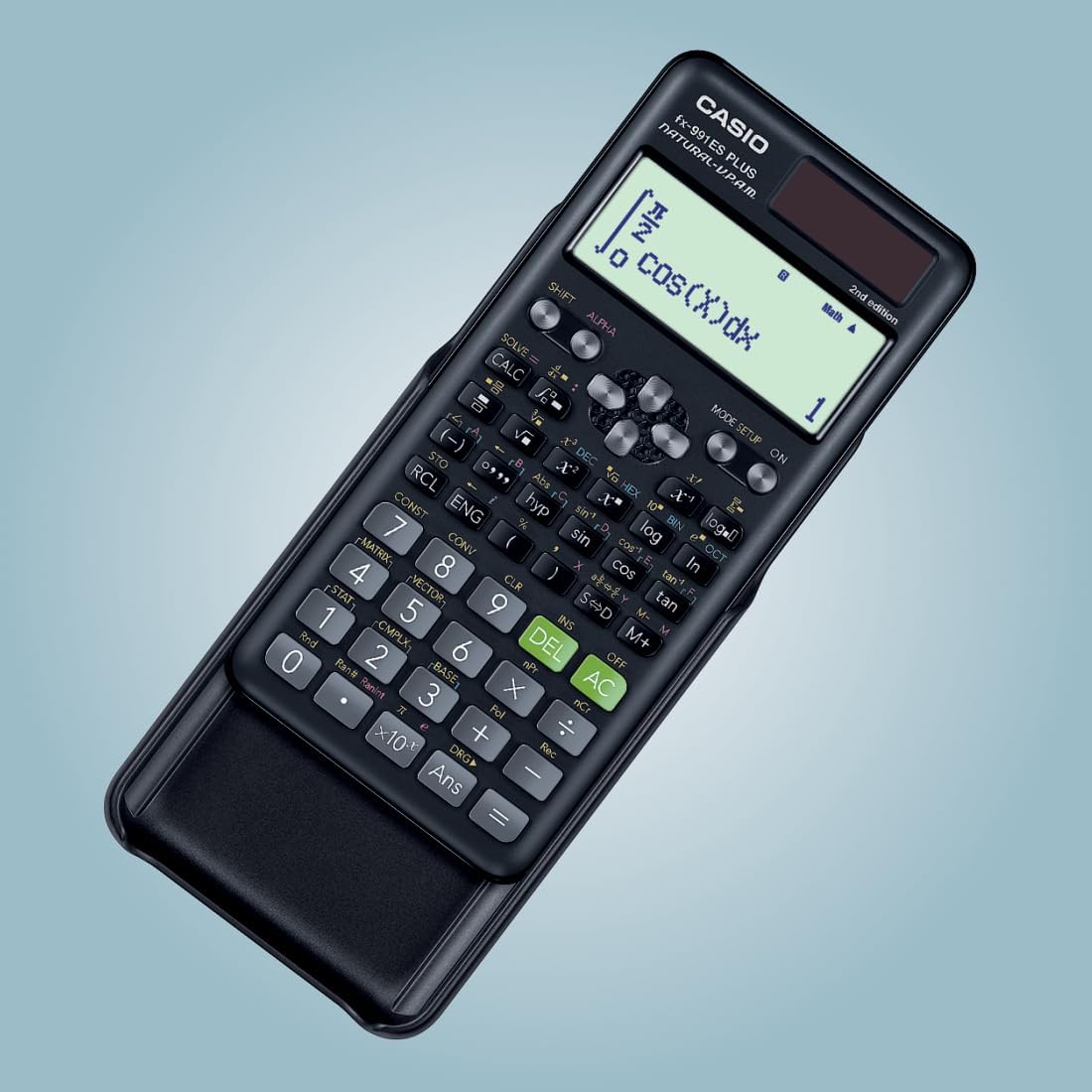
Casio FX-991ES Plus
The professional-grade scientific calculator with 417 functions, natural display, and solar power. Perfect for students and professionals.
View on Amazon