Dilution Factor Calculator
Calculate dilutions, concentrations, and volumes for laboratory work
Dilution Equation: C₁V₁ = C₂V₂
Calculate any one variable given the other three
Initial Solution
Final Solution
Dilution Factor: DF = V_final / V_sample
Or: DF = C_initial / C_final
Serial Dilution
Total Dilution Factor = DF₁ × DF₂ × DF₃ × ...
Mixing Two Solutions
C_final = (C₁V₁ + C₂V₂) / (V₁ + V₂)
Solution 1
Solution 2
Result
Laboratory Instructions
Calculation Steps
Serial Dilution Table
Understanding Dilutions
Dilution is the process of reducing the concentration of a solution by adding more solvent. This fundamental technique is used extensively in analytical chemistry, biology, and clinical laboratories. The key principle is that the amount of solute remains constant while the volume increases.
Key Formulas
Dilution Equation
C₁V₁ = C₂V₂
- • C₁ = initial concentration
- • V₁ = initial volume (volume to transfer)
- • C₂ = final concentration
- • V₂ = final volume (total volume)
Dilution Factor
DF = V_final / V_sample = C_initial / C_final
A dilution factor of 10 means the solution is 10 times less concentrated (1:10 dilution).
Serial Dilution
Total DF = DF₁ × DF₂ × DF₃ × ...
Three 1:10 dilutions give a total dilution factor of 1000 (10 × 10 × 10).
Example Problems
Example 1: Making a Dilution
Problem: You need 50 mL of 0.1 M NaCl. You have a 1 M stock solution. How much stock do you need?
Solution:
C₁V₁ = C₂V₂
(1 M)(V₁) = (0.1 M)(50 mL)
V₁ = 5 mL
Answer: Take 5 mL of stock and add water to 50 mL total
Example 2: Dilution Factor
Problem: You dilute 1 mL of sample to 10 mL total. What's the dilution factor?
Solution:
DF = V_final / V_sample
DF = 10 mL / 1 mL
DF = 10
Answer: This is a 1:10 dilution (dilution factor = 10)
Example 3: Serial Dilution
Problem: Starting with 100 mg/mL, perform three 1:10 dilutions. What's the final concentration?
Solution:
Total DF = 10 × 10 × 10 = 1000
C_final = C_initial / DF
C_final = 100 mg/mL / 1000
C_final = 0.1 mg/mL
Answer: Final concentration is 0.1 mg/mL (100 µg/mL)
Common Dilution Ratios
| Dilution Ratio | Dilution Factor | Sample Volume | Final Volume | Diluent to Add |
|---|---|---|---|---|
| 1:2 | 2 | 1 mL | 2 mL | 1 mL |
| 1:5 | 5 | 1 mL | 5 mL | 4 mL |
| 1:10 | 10 | 1 mL | 10 mL | 9 mL |
| 1:100 | 100 | 1 mL | 100 mL | 99 mL |
| 1:1000 | 1000 | 1 mL | 1000 mL | 999 mL |
Applications of Dilutions
1. Analytical Chemistry
Preparing standard solutions for calibration curves, bringing samples into measurable range for spectrophotometry, and diluting concentrated acids and bases.
2. Microbiology
Serial dilutions for colony counting, preparing bacterial cultures to desired cell density, and diluting samples for plate counts.
3. Molecular Biology
Diluting DNA/RNA for PCR, preparing working concentrations of enzymes and buffers, and diluting protein samples for assays.
4. Clinical Chemistry
Diluting patient samples when analyte concentration exceeds instrument range, preparing quality control materials, and making reagent working solutions.
5. Pharmaceutical Sciences
Preparing drug formulations at specific concentrations, diluting stock solutions for dose-response studies, and making standard solutions for drug analysis.
References
Dilution calculations are based on fundamental analytical chemistry principles from reputable sources:
Note: Always use proper laboratory techniques when performing dilutions. Use calibrated pipettes and volumetric flasks for accurate results. Mix solutions thoroughly after dilution. Remember that the calculation assumes volumes are additive and temperature effects are negligible. For precision work, consider temperature-dependent volume changes and non-ideal solution behavior.
Recommended Calculator
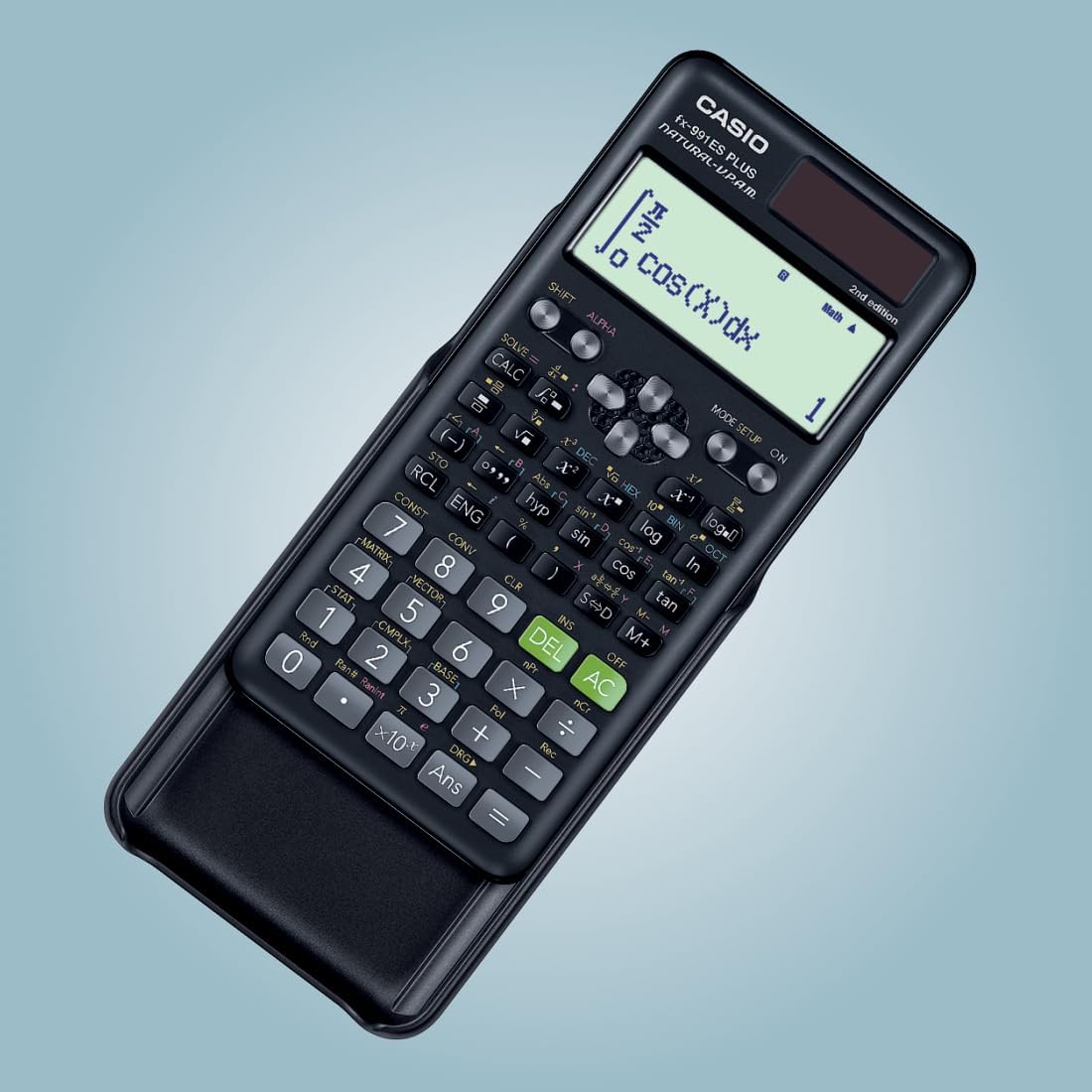
Casio FX-991ES Plus
The professional-grade scientific calculator with 417 functions, natural display, and solar power. Perfect for students and professionals.
View on Amazon