Empirical Formula Calculator
Determine empirical formula from percent composition or mass data of elements in compounds
Empirical Formula
Empirical Formula Mass
g/mol
Total Elements
Step-by-Step Calculation
Mole Ratio Analysis
| Element | Mass/Percent | Moles | Ratio | Subscript |
|---|
What is an Empirical Formula?
An empirical formula represents the simplest whole-number ratio of atoms of each element in a compound. Unlike molecular formulas that show the actual number of atoms, empirical formulas show the lowest ratio. For example, glucose has a molecular formula of C₆H₁₂O₆, but its empirical formula is CH₂O (a 1:2:1 ratio).
Key Difference:
- Empirical Formula: Simplest ratio (CH₂O)
- Molecular Formula: Actual number of atoms (C₆H₁₂O₆)
- Relationship: Molecular formula = (Empirical formula) × n
How to Calculate Empirical Formula
- Convert to mass: If given percentages, assume 100g sample
- Convert mass to moles: Divide each element's mass by its atomic mass
- Find smallest mole value: Identify the element with the fewest moles
- Divide by smallest: Create mole ratios by dividing all by the smallest
- Multiply to whole numbers: If ratios aren't whole numbers, multiply all by the same factor
- Write formula: Use the whole number ratios as subscripts
Worked Example: Unknown Compound
Problem:
A compound is analyzed and found to contain 40.00% carbon, 6.71% hydrogen, and 53.29% oxygen by mass. What is its empirical formula?
Step 1: Assume 100g sample
• C: 40.00g
• H: 6.71g
• O: 53.29g
Step 2: Convert to moles
• C: 40.00g ÷ 12.011 g/mol = 3.331 mol
• H: 6.71g ÷ 1.008 g/mol = 6.657 mol
• O: 53.29g ÷ 15.999 g/mol = 3.331 mol
Step 3: Divide by smallest (3.331)
• C: 3.331 ÷ 3.331 = 1.000
• H: 6.657 ÷ 3.331 = 1.998 ≈ 2
• O: 3.331 ÷ 3.331 = 1.000
Step 4: Write formula
The ratios are 1:2:1, so the empirical formula is CH₂O
Answer: The empirical formula is CH₂O (empirical mass = 30.026 g/mol)
Note: This could be the empirical formula for formaldehyde (CH₂O), acetic acid (C₂H₄O₂), glucose (C₆H₁₂O₆), or any other compound with this ratio.
Common Decimal to Whole Number Conversions
When mole ratios aren't whole numbers, multiply all ratios by the appropriate factor:
Real-World Applications
Pharmaceutical Research
When discovering new compounds, chemists use elemental analysis to determine empirical formulas before identifying the complete molecular structure.
Material Science
Analyzing unknown materials or verifying the composition of synthesized compounds in research and quality control.
Environmental Chemistry
Identifying pollutants and contaminants through combustion analysis and elemental composition studies.
Academic Learning
Essential concept in general chemistry courses for understanding molecular composition and stoichiometry.
References
Empirical formula calculations are based on fundamental stoichiometry principles and standard atomic weights:
Note: This calculator determines the empirical formula only. To find the molecular formula, you need the compound's molar mass. The molecular formula is always a whole number multiple of the empirical formula.
Recommended Calculator
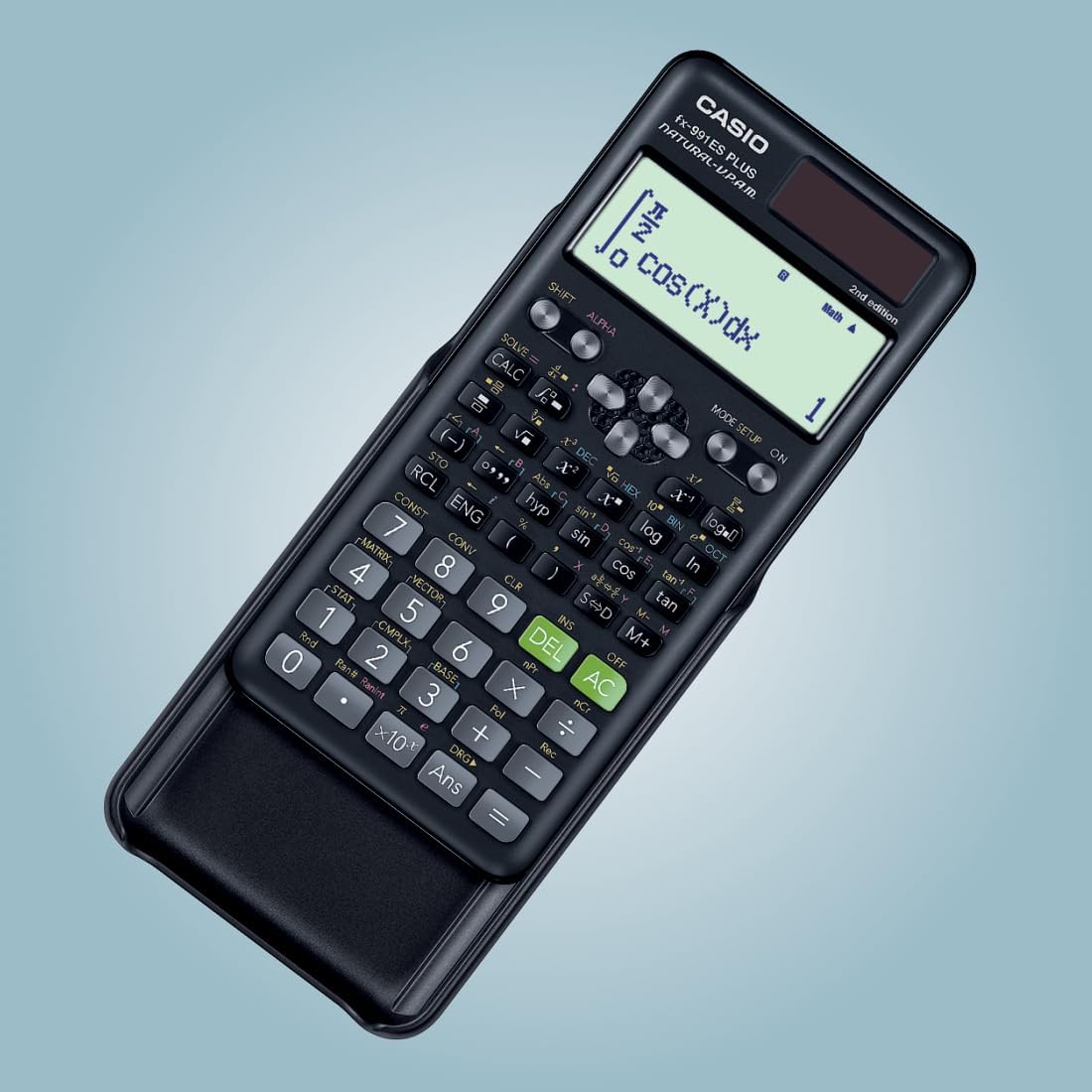
Casio FX-991ES Plus
The professional-grade scientific calculator with 417 functions, natural display, and solar power. Perfect for students and professionals.
View on Amazon