Air Quality Index (AQI) Calculator
Calculate the Air Quality Index (AQI) based on pollutant concentrations and health recommendations
AQI Value
Category
Pollutant
AQI Scale Position
Health Recommendation
Calculation Details
| Parameter | Value |
|---|
Understanding the AQI Scale
The Air Quality Index (AQI) is a standardized indicator developed by the U.S. Environmental Protection Agency (EPA) to communicate how polluted the air currently is or is forecast to become. The AQI runs from 0 to 500 and is divided into six categories, each corresponding to a different level of health concern. An AQI value of 100 generally corresponds to the national air quality standard for the pollutant.
0 - 50: Good
Air quality is satisfactory, and air pollution poses little or no risk.
51 - 100: Moderate
Air quality is acceptable. However, there may be a risk for some people, particularly those who are unusually sensitive to air pollution.
101 - 150: Unhealthy for Sensitive Groups
Members of sensitive groups (children, elderly, people with respiratory or heart conditions) may experience health effects. The general public is less likely to be affected.
151 - 200: Unhealthy
Everyone may begin to experience health effects; members of sensitive groups may experience more serious health effects.
201 - 300: Very Unhealthy
Health alert: The risk of health effects is increased for everyone.
301 - 500: Hazardous
Health warning of emergency conditions: everyone is more likely to be affected.
Pollutants Measured in the AQI
PM2.5
- • Fine particles < 2.5 micrometers
- • Penetrates deep into lungs and blood
- • Sources: combustion, vehicles, fires
- • Averaging: 24-hour mean
PM10
- • Coarse particles < 10 micrometers
- • Irritates airways and lungs
- • Sources: dust, pollen, construction
- • Averaging: 24-hour mean
O₃ (Ozone)
- • Ground-level ozone
- • Triggers asthma and lung damage
- • Formed by NOx + VOCs + sunlight
- • Averaging: 8-hour mean
CO (Carbon Monoxide)
- • Colorless, odorless toxic gas
- • Reduces oxygen delivery to organs
- • Sources: vehicles, heaters, fires
- • Averaging: 8-hour mean
SO₂ (Sulfur Dioxide)
- • Irritates respiratory system
- • Contributes to acid rain
- • Sources: power plants, industry
- • Averaging: 1-hour mean
NO₂ (Nitrogen Dioxide)
- • Irritates airways
- • Contributes to ozone formation
- • Sources: vehicles, power plants
- • Averaging: 1-hour mean
How AQI is Calculated
The AQI is computed using the EPA's piecewise linear function. For each pollutant, the measured concentration is mapped to an AQI value using defined breakpoint tables. The formula is:
- C = the pollutant concentration (truncated to appropriate precision)
- C_low = the concentration breakpoint that is ≤ C
- C_high = the concentration breakpoint that is ≥ C
- I_low = the AQI value corresponding to C_low
- I_high = the AQI value corresponding to C_high
When multiple pollutants are monitored, the overall AQI is the highest individual AQI among all pollutants, and the responsible pollutant is reported as the "dominant pollutant."
References
The AQI breakpoints and calculation methodology used in this calculator are based on official U.S. EPA standards and documentation:
Note: This calculator uses the official U.S. EPA AQI breakpoint tables and piecewise linear interpolation formula. AQI values above 500 are considered "Beyond the AQI" and are not officially defined. Other countries use different air quality indices (e.g., the European AQI or China's HJ 633-2012), which have different breakpoints and categories. Always consult local air quality monitoring agencies for real-time data and advisories.
Recommended Calculator
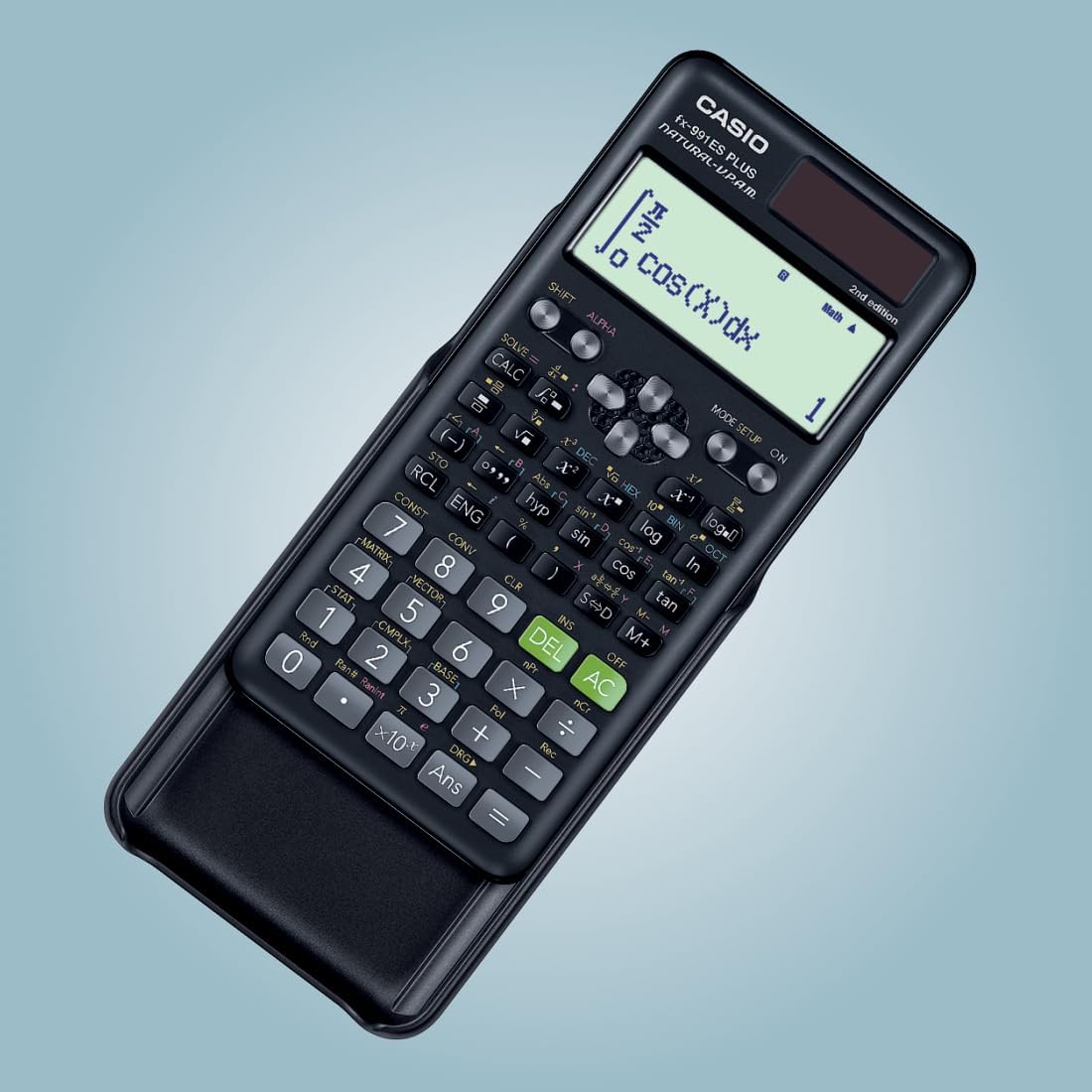
Casio FX-991ES Plus
The professional-grade scientific calculator with 417 functions, natural display, and solar power. Perfect for students and professionals.
View on Amazon