Ingredient Scaling Calculator
Scale recipe ingredients up or down based on serving size adjustments for accurate baking results
Scaled Recipe
Scaling Summary
Original
Scaled
Factor
Ingredients
How Ingredient Scaling Works
Ingredient scaling adjusts recipe quantities proportionally based on a scale factor. If a recipe serves 8 and you need 12 servings, the scale factor is 12 ÷ 8 = 1.5, meaning every ingredient is multiplied by 1.5. This principle applies equally when scaling down — halving a recipe uses a factor of 0.5. While the math is straightforward for most ingredients, baking requires extra attention because leavening agents, eggs, and fats can behave differently at larger or smaller volumes.
The Scale Factor Formula
Scale Factor = Desired Servings ÷ Original Servings
Scaled Amount = Original Amount × Scale Factor
Baking Scaling Tips
Leavening Agents
Baking powder and baking soda scale linearly for small adjustments (up to 2×). For larger batches, reduce leavening by about 20–25% to avoid over-rising and a bitter aftertaste. Too much leavener can cause the batter to rise too fast and then collapse.
Eggs
Eggs cannot be split easily. When scaling produces a fractional egg count, beat a whole egg and measure out the needed portion (one large egg is roughly 50 ml or 3¼ tablespoons). Use this method to maintain the correct ratio of fat, protein, and moisture.
Spices & Salt
When doubling or tripling a recipe, start with 1.5× the original amount of spices and salt, then taste and adjust. Flavor compounds don’t always scale linearly, and over-seasoning is harder to fix than under-seasoning.
Baking Time & Temperature
Scaled recipes often need adjusted bake times. Larger batches in bigger pans require longer baking at slightly lower temperatures (reduce by 25°F / 15°C). Smaller batches may bake faster. Always check for doneness with a toothpick or thermometer.
Common Baking Measurement Conversions
| Measurement | Equivalent | Metric |
|---|---|---|
| 1 cup flour | 16 tablespoons | 120 g |
| 1 cup granulated sugar | 16 tablespoons | 200 g |
| 1 cup butter | 2 sticks / 16 tbsp | 227 g |
| 1 cup brown sugar (packed) | 16 tablespoons | 220 g |
| 1 cup milk / water | 8 fluid ounces | 240 ml |
| 1 large egg | 3¼ tablespoons | ~50 g |
| 1 tablespoon | 3 teaspoons | 15 ml |
| 1 cup powdered sugar | 16 tablespoons | 120 g |
Pan Size Guide for Scaled Recipes
When scaling a recipe, you may need a different pan size. The volume of a pan determines how much batter it can hold. Here are common pan volumes to help you choose the right one:
Round Pans
- • 8″ round: ~6 cups
- • 9″ round: ~8 cups
- • 10″ round: ~11 cups
Rectangular Pans
- • 8″×8″: ~8 cups
- • 9″×13″: ~14 cups
- • 11″×15″ (jelly roll): ~10 cups
Loaf & Bundt Pans
- • 8″×4″ loaf: ~6 cups
- • 9″×5″ loaf: ~8 cups
- • 10″ Bundt: ~12 cups
References
The scaling guidelines and conversion data used in this calculator are based on established baking science and culinary resources:
Note: This calculator scales ingredients using simple proportional math. For baking recipes, always consider the special guidelines above for leavening agents, eggs, spices, and bake times. Results are rounded to practical measurements. For best accuracy in baking, weigh ingredients with a kitchen scale rather than relying solely on volume measurements.
Recommended Calculator
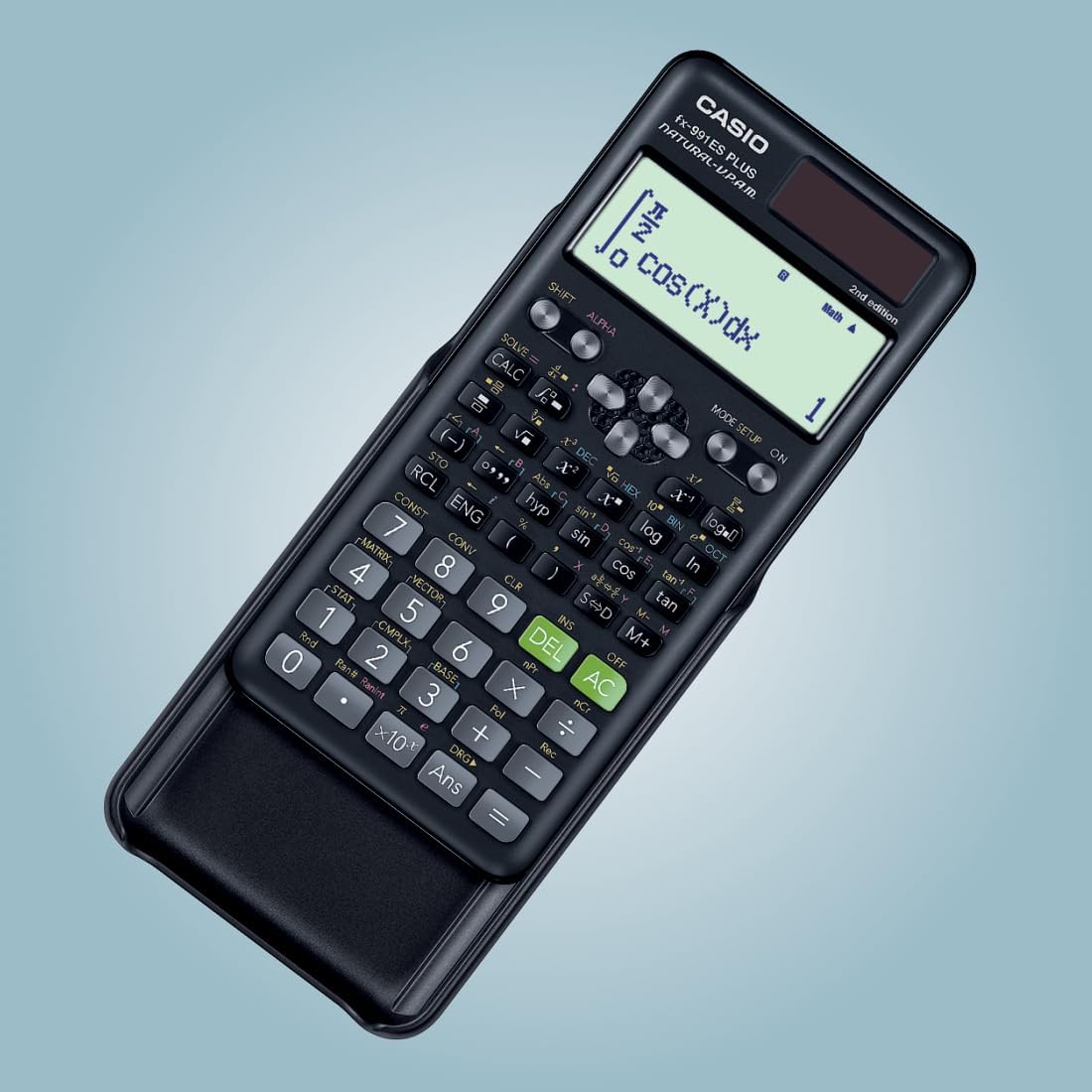
Casio FX-991ES Plus
The professional-grade scientific calculator with 417 functions, natural display, and solar power. Perfect for students and professionals.
View on Amazon