Power Output Calculator
Calculate power output, work done, and time using energy and power equations
Power (P)
Work / Energy (W)
Time (t)
Kilowatts
Horsepower
BTU/hour
Energy (kWh)
Calculation Details
Understanding Power
Power is the rate at which work is done or energy is transferred over time. The SI unit of power is the watt (W), defined as one joule per second. Power tells us not just how much energy is used, but how quickly it is used — a crucial distinction in physics and engineering. The concept was formalized by James Watt, who also introduced the unit of horsepower to compare steam engine output with draft horses.
Key Formulas
- P = W / t — Power equals work done divided by time
- P = F × v — Mechanical power equals force times velocity (constant force in direction of motion)
- P = I × V — Electrical power equals current times voltage
- P = F · v · cosθ — General form when force and velocity are not aligned
Variables
- P — Power (W, watts)
- W — Work or energy (J, joules)
- t — Time (s, seconds)
- F — Force (N, newtons)
- v — Velocity (m/s)
- I — Electric current (A, amperes)
- V — Voltage (V, volts)
Power Unit Conversions
| Unit | Symbol | Equivalent in Watts | Common Use |
|---|---|---|---|
| Watt | W | 1 | SI base unit of power |
| Kilowatt | kW | 1,000 | Household appliances, electric motors |
| Megawatt | MW | 1,000,000 | Power plants, large industrial systems |
| Mechanical Horsepower | hp | 745.7 | Engines, motors |
| BTU per hour | BTU/h | 0.2931 | HVAC, heating and cooling |
| Kilowatt-hour | kWh | 3,600,000 J (energy) | Electricity billing |
Types of Power
Mechanical Power
- • P = W / t or P = F × v
- • Rate of doing physical work
- • Used in engines, turbines, and machinery
- • Often measured in horsepower
Electrical Power
- • P = I × V = I²R = V²/R
- • Rate of electrical energy transfer
- • Used in circuits, appliances, and grids
- • Measured in watts or kilowatts
Thermal Power
- • Rate of heat energy transfer
- • Used in HVAC and combustion engines
- • Often measured in BTU/h or kW
- • Subject to thermodynamic efficiency limits
Real-World Examples
Power output varies enormously across different systems and scales:
- A human at rest produces about 80 W of heat; during intense exercise, muscle power output can reach 400–2,000 W for short bursts
- A typical household LED light bulb uses about 10 W, while an incandescent bulb uses 60 W for similar brightness
- A car engine producing 150 hp (≈112 kW) at 60 mph exerts roughly 2,800 N of driving force
- A microwave oven rated at 1,000 W running for 2 minutes performs 120,000 J (120 kJ) of work on the food
- The Hoover Dam generates approximately 2,080 MW, enough to power about 1.3 million homes
- The total power output of the Sun is about 3.846 × 10²⁶ W (386 yottawatts)
Power and Efficiency
Real machines never convert 100% of input energy into useful output. The efficiency (η) of a system is the ratio of useful power output to total power input:
η = P_out / P_in × 100%
Typical Efficiencies:
- Electric motors: 85–95%
- Gasoline car engines: 20–35%
- Diesel engines: 30–45%
- Solar photovoltaic panels: 15–22%
- LED light bulbs: ~40–50% (visible light output)
- Combined-cycle gas turbine power plants: 55–62%
References
The formulas and constants used in this calculator are based on established physics principles and verified sources:
Related Calculators
Note: This calculator uses ideal formulas and does not account for energy losses due to friction, heat dissipation, air resistance, or other inefficiencies. Real-world power output may be lower than calculated values. Electrical calculations assume purely resistive loads (DC or unity power factor AC).
Recommended Calculator
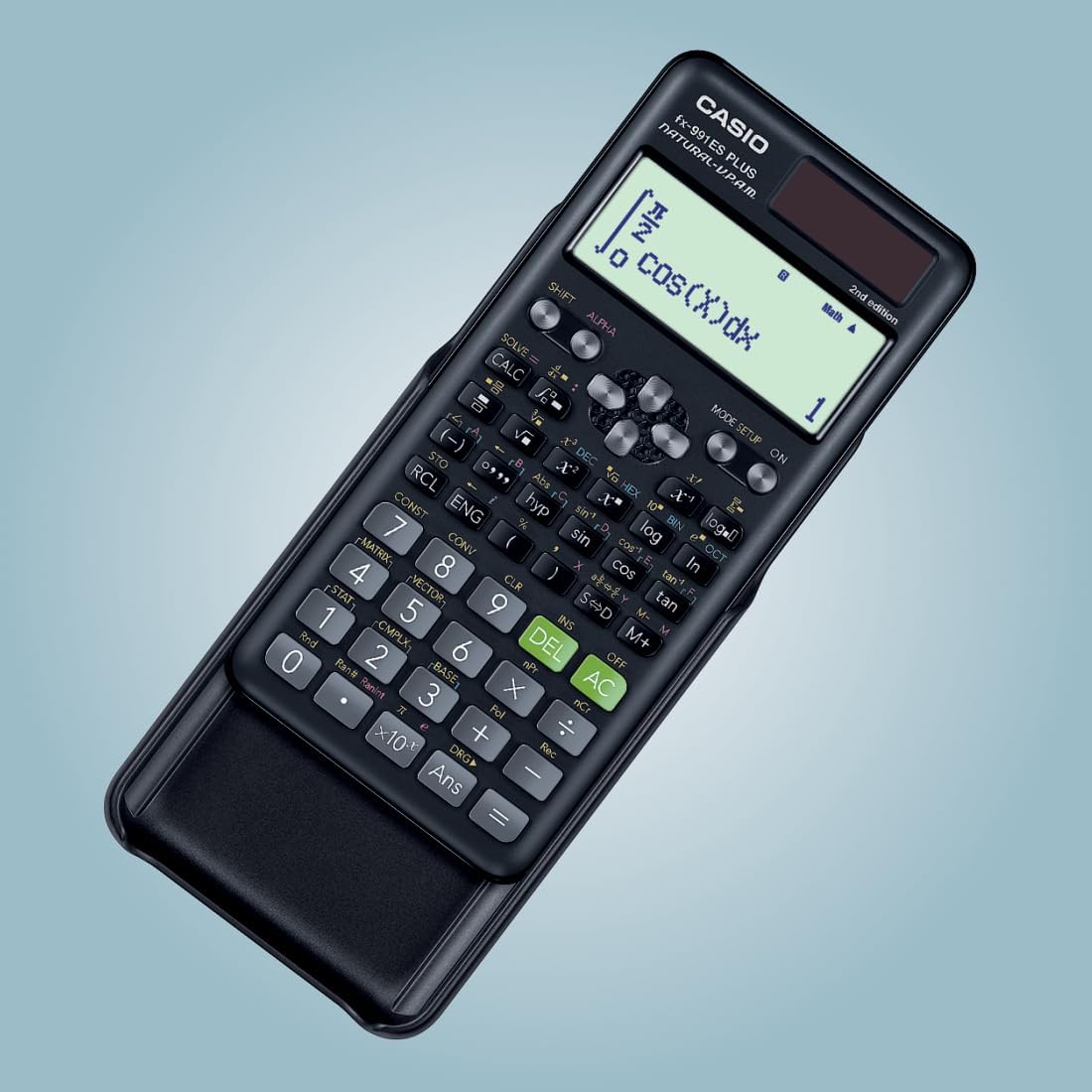
Casio FX-991ES Plus
The professional-grade scientific calculator with 417 functions, natural display, and solar power. Perfect for students and professionals.
View on Amazon