One Rep Max (1RM) Calculator
Estimate the maximum weight you can lift for a single repetition using multiple research-backed prediction formulas
Most accurate with 1–10 reps
Estimated 1RM (Average)
Range (Low – High)
Input Summary
Formula Comparison
Percentage-Based Training Loads
Based on your average estimated 1RM. Use these loads to program your training.
| % of 1RM | Weight | Approx. Reps | Training Goal |
|---|
About the One Rep Max (1RM)
Your one-rep max (1RM) is the maximum amount of weight you can lift for a single repetition with proper form. It is one of the most fundamental measurements of absolute strength and is used by coaches, athletes, and researchers to design training programs, track progress, and compare strength levels.
Formulas Used
- Epley (1985): 1RM = w × (1 + r / 30)
- Brzycki (1993): 1RM = w × 36 / (37 − r)
- Lombardi (1989): 1RM = w × r0.10
- Mayhew et al. (1992): 1RM = 100 × w / (52.2 + 41.9 × e−0.055r)
- O'Conner et al. (1989): 1RM = w × (1 + 0.025 × r)
- Wathen (1994): 1RM = 100 × w / (48.8 + 53.8 × e−0.075r)
- Lander (1985): 1RM = 100 × w / (101.3 − 2.67123 × r)
Where w = weight lifted and r = number of repetitions. All formulas are most accurate when reps are between 1 and 10. Accuracy decreases as the rep count increases because the relationship between submaximal weight and true max becomes less linear.
Which Formula Is Best?
- Epley and Brzycki are the most widely used and tend to agree closely at lower rep ranges
- Brzycki is slightly more conservative and preferred in powerlifting circles
- Wathen and Mayhew use exponential curves and may be more accurate at higher reps (8–12)
- Lombardi is simple but tends to underestimate for trained lifters
- Using the average of multiple formulas provides the most reliable estimate
Training Zones by 1RM Percentage
Strength (85–100%)
- • 1–5 reps per set
- • Long rest periods (3–5 min)
- • Maximal neural recruitment
- • Best for powerlifting and peaking
Hypertrophy (65–85%)
- • 6–12 reps per set
- • Moderate rest (60–90 sec)
- • Maximizes muscle growth stimulus
- • Best for bodybuilding and size
Endurance (50–65%)
- • 15–25+ reps per set
- • Short rest (30–60 sec)
- • Improves muscular endurance
- • Best for conditioning and GPP
Tips for Testing Your 1RM Safely
- Always warm up thoroughly with progressively heavier sets before attempting a max
- Use a competent spotter or safety pins/straps, especially for bench press and squat
- Start from a calculated estimate and work up in small increments (2.5–5 kg / 5–10 lbs)
- Rest 3–5 minutes between heavy attempts
- Stop the test if your form breaks down — a 1RM should be a grind, not a form disaster
- Consider using a 3RM or 5RM test and calculating your 1RM instead for a safer approach
- Beginners should train for at least 3–6 months before attempting true maxes
References
The prediction formulas used in this calculator are based on peer-reviewed research in exercise science:
- LeSuer, D.A. et al. (1997). "The Accuracy of Prediction Equations for Estimating 1-RM Performance in the Bench Press, Squat, and Deadlift." Journal of Strength and Conditioning Research.
- Brzycki, M. (1993). "Strength Testing — Predicting a One-Rep Max from Reps-to-Fatigue." Journal of Physical Education, Recreation & Dance, 64(1), 88–90.
- Reynolds, J.M., Gordon, T.J., Robergs, R.A. (2006). "Prediction of one repetition maximum strength from multiple repetition maximum testing and anthropometry." Journal of Strength and Conditioning Research, 20(3), 584–592.
- Wikipedia — One-repetition maximum (overview of formulas and research)
Related Calculators
Note: 1RM prediction formulas provide estimates based on submaximal performance. Actual maximal strength depends on many factors including technique, fatigue, training status, nutrition, and psychological readiness. These formulas are most accurate with 1-10 reps and become less reliable above 10 reps. Always prioritize safety and proper form when training near your maximum.
Recommended Calculator
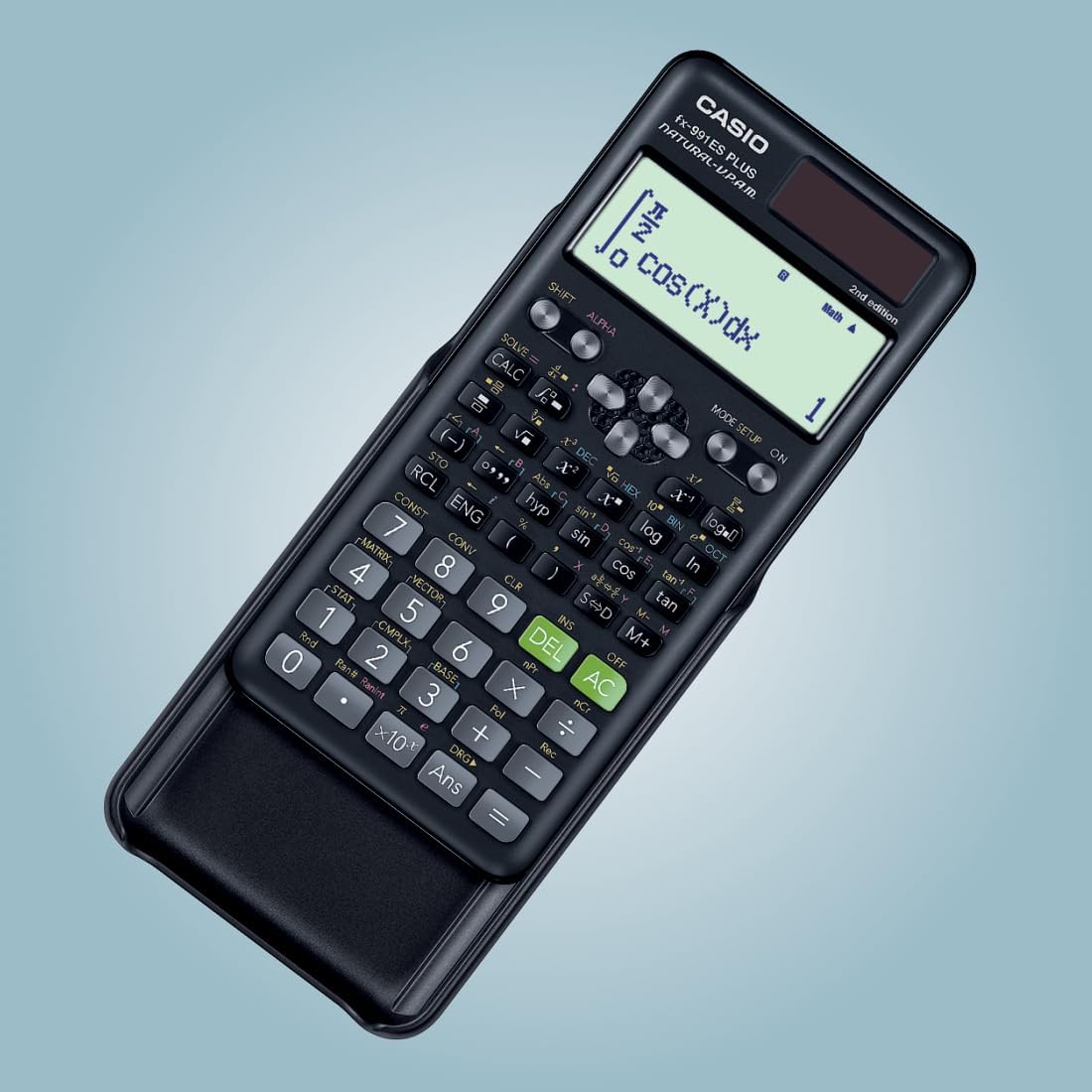
Casio FX-991ES Plus
The professional-grade scientific calculator with 417 functions, natural display, and solar power. Perfect for students and professionals.
View on Amazon