Player Efficiency Rating (PER) Calculator
Calculate a basketball player's PER using John Hollinger's formula to evaluate overall performance in a single number
Player Stats
League & Team Context
Avg. possessions per 48 min (NBA ~100)
Team's possessions per 48 min
League average assist factor (~0.50)
Player Efficiency Rating
Points Per Minute
Assists Per Game
Per-Game Averages
PPG
RPG
APG
SPG
BPG
TOV/G
FG%
FT%
PER Contribution Breakdown
About Player Efficiency Rating (PER)
Player Efficiency Rating (PER) is an all-in-one basketball rating created by ESPN columnist John Hollinger. It sums up all a player's positive accomplishments, subtracts the negative accomplishments, and produces a per-minute rating of a player's performance. The league average PER is always 15.00, which makes it easy to compare players across eras and teams.
Simplified PER Formula
The full PER calculation is complex and involves multiple steps. The simplified version used here captures the key components:
This calculator uses a simplified estimation of PER. The official NBA PER requires full league-wide and team-level data for precise pace adjustment and normalization. Our approximation closely tracks the official PER for most player profiles.
PER Benchmarks
- 35.0+ - All-Time Great Season (MVP-caliber)
- 27.0 - 34.9 - Definite MVP Candidate
- 22.0 - 26.9 - All-Star Level
- 18.0 - 21.9 - Above Average Starter
- 15.0 - 17.9 - Average (League Average = 15.0)
- 12.0 - 14.9 - Below Average
- 9.0 - 11.9 - Rotation Player
- Below 9.0 - Bench / End of Roster
Notable PER Records
Highest Career PER
- 1. Michael Jordan - 27.91
- 2. LeBron James - 27.28
- 3. Anthony Davis - 26.67
- 4. Nikola Jokic - 26.52
- 5. Shaquille O'Neal - 26.43
Highest Single Season
- 1. Nikola Jokic (2023-24) - 32.85
- 2. Giannis Antetokounmpo (2019-20) - 31.86
- 3. Wilt Chamberlain (1962-63) - 31.82
- 4. Wilt Chamberlain (1961-62) - 31.74
- 5. Michael Jordan (1987-88) - 31.71
Key Facts
- • League average is always normalized to 15.0
- • Created by John Hollinger in the early 2000s
- • Now maintained by ESPN and Basketball Reference
- • Accounts for pace differences between teams/eras
- • Does not capture all defensive contributions
Strengths and Limitations of PER
What PER Captures
- Scoring efficiency (field goals, free throws, three-pointers)
- Rebounding contributions (offensive and defensive)
- Playmaking ability (assists)
- Ball security and turnovers
- Steals and blocks
- Pace-adjusted per-minute performance
Limitations
- Does not fully capture defensive impact
- Favors high-usage players who dominate the ball
- Does not measure intangibles like leadership and spacing
- Off-ball movement and gravity are not reflected
- Can be inflated in limited minutes (small sample)
- Team context (supporting cast quality) is not considered
References
The PER formula and benchmarks used in this calculator are based on the following sources:
Related Calculators
Note: This calculator uses a simplified estimation of PER. The official NBA Player Efficiency Rating requires complete league-wide statistical data for precise pace adjustment and normalization to a 15.0 league average. Results closely approximate official PER for most player profiles but may differ slightly from published figures.
Recommended Calculator
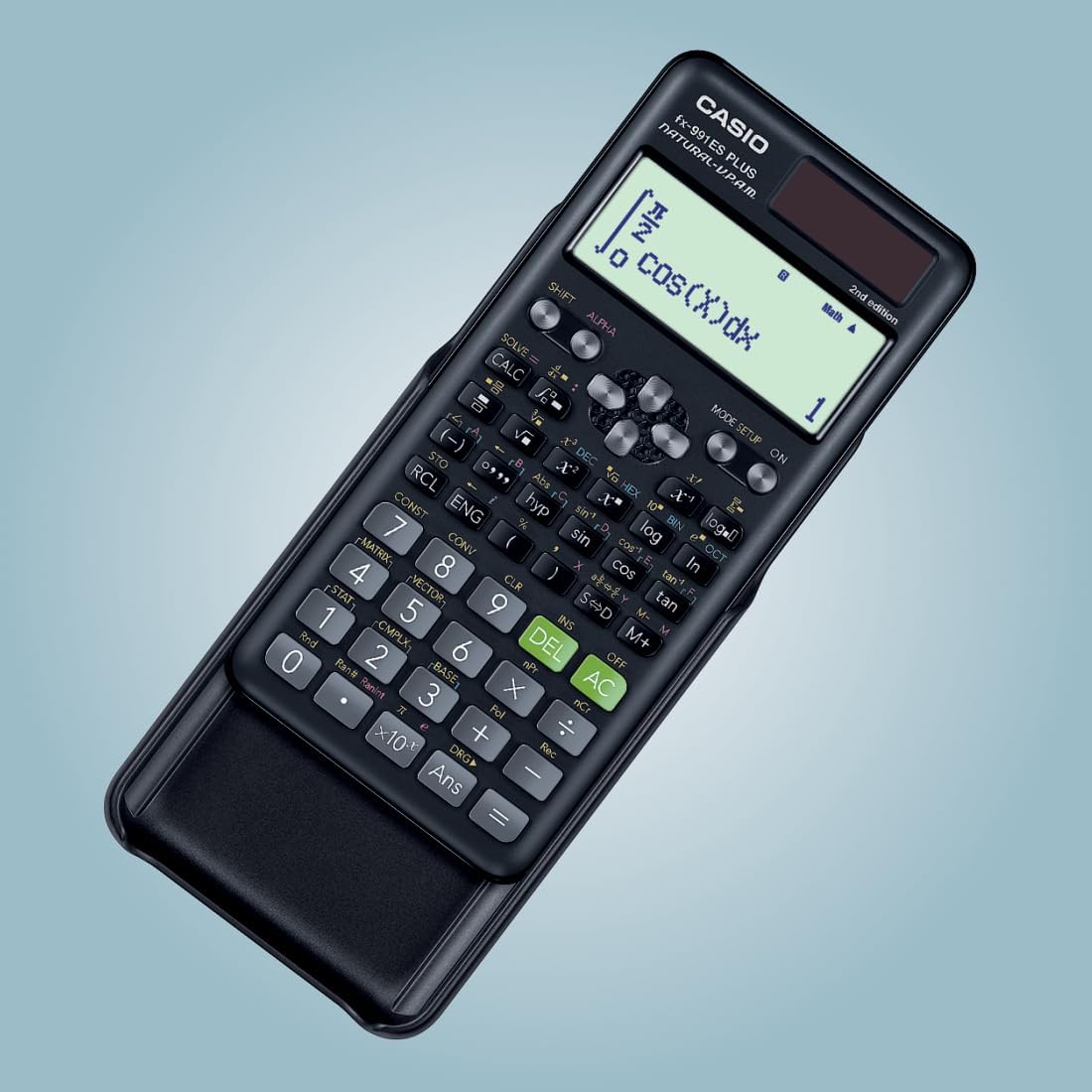
Casio FX-991ES Plus
The professional-grade scientific calculator with 417 functions, natural display, and solar power. Perfect for students and professionals.
View on Amazon