Swim Pace Calculator
Calculate your swim pace per 100m/yd, split times, and predicted race times
Pace per 100
per 100m
Total Time
Speed
distance / time
Split Times
| Split | Distance | Cumulative Time |
|---|
Predicted Race Times
Estimated times at the same pace — actual race times vary with distance due to fatigue and pacing strategy.
Understanding Swim Pace
Swim pace is expressed as the time it takes to swim 100 meters (or 100 yards). It is the fundamental metric for training and racing in competitive swimming. Knowing your pace helps structure interval training, set race goals, and track improvement over time.
Formulas
- Pace per 100 = Total Time / (Distance / 100)
- Total Time = Pace per 100 × (Distance / 100)
- Distance = (Total Time / Pace per 100) × 100
- Speed (m/s) = Distance / Total Time (in seconds)
Pace Benchmarks (per 100m freestyle)
- Under 1:00 — Elite / competitive swimmers
- 1:00 – 1:20 — Advanced club swimmers
- 1:20 – 1:45 — Intermediate / fitness swimmers
- 1:45 – 2:15 — Beginner swimmers
- Over 2:15 — Novice / learning swimmers
Standard Swimming Distances
Sprint Events
- • 50m — One length of Olympic pool
- • 100m — The flagship sprint event
- • 200m — Short-distance endurance
Middle Distance
- • 400m — Requires strong pacing
- • 800m — Women's Olympic distance event
- • 1500m — "Mile" of swimming
Open Water
- • 5K — Standard open water race
- • 10K — Olympic marathon swim
- • 25K — Ultra-distance open water
Using Pace in Training
Swim pace is the foundation of structured training. Coaches and swimmers use pace zones to target different energy systems:
- Recovery pace: 15-20 seconds slower than race pace — used for warm-up, cool-down, and active recovery sets
- Aerobic / endurance pace: 5-10 seconds slower than race pace — builds base fitness and aerobic capacity
- Threshold pace: Close to race pace for longer events (400m+) — improves lactate threshold
- Race pace: Target pace for your goal event — practiced in specific race-simulation sets
- Sprint pace: Faster than race pace, used for short repeats (25-50m) to develop speed and power
- Negative splitting: Swimming the second half faster than the first — a common pacing strategy for middle-distance events
References
Pace benchmarks and training concepts are based on established swimming science and coaching resources:
Related Calculators
Note: This calculator provides pace estimates assuming a constant speed. In practice, swim times are influenced by stroke type, turns, starts, fatigue, drafting (in open water), and individual fitness. Predicted race times are projections at constant pace and may differ from actual results. Use these figures as training guidelines.
Recommended Calculator
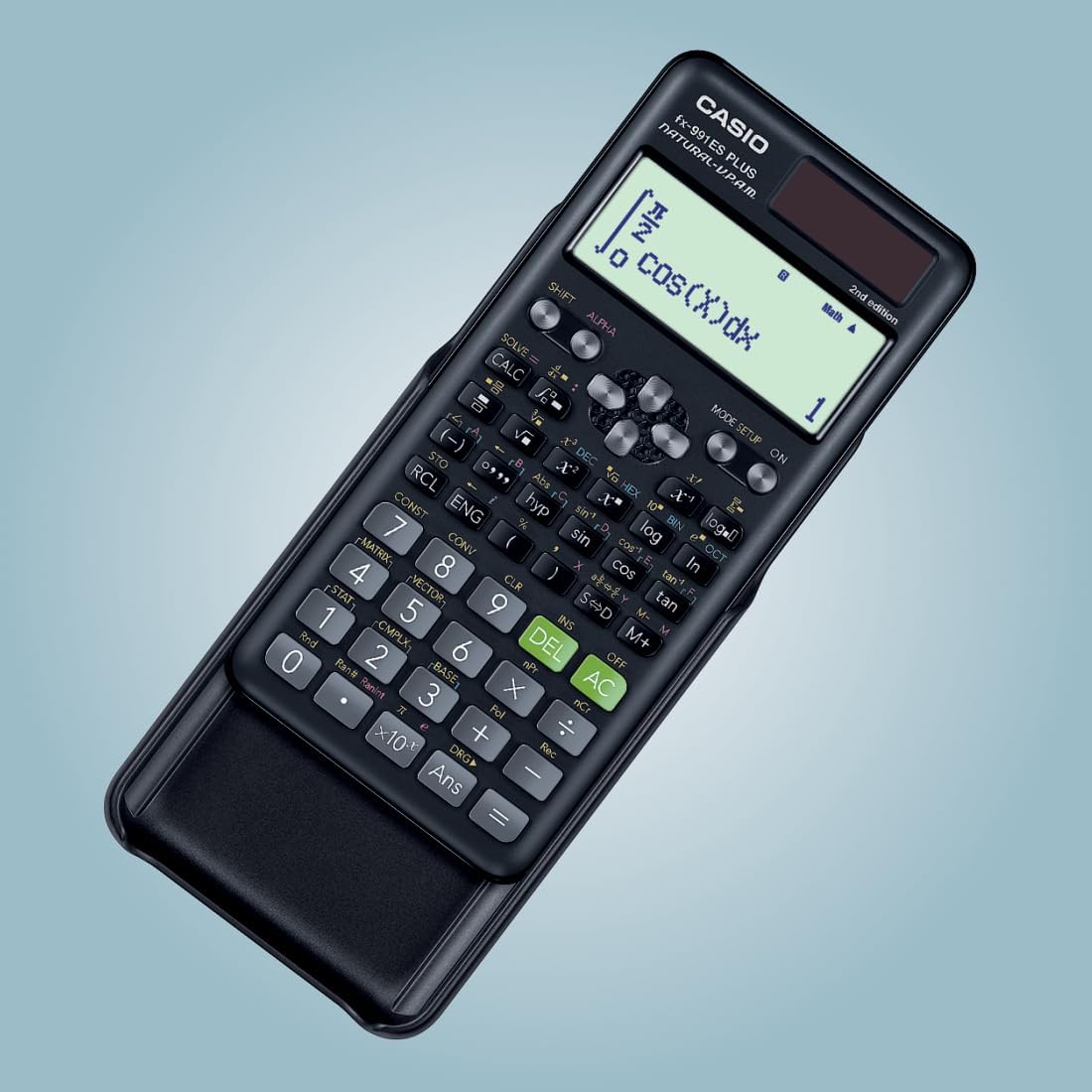
Casio FX-991ES Plus
The professional-grade scientific calculator with 417 functions, natural display, and solar power. Perfect for students and professionals.
View on Amazon