Mean, Median & Mode Calculator
Enter a dataset to calculate measures of central tendency, spread, and distribution shape. Supports comma-separated, space-separated, or newline-separated values.
Separate values with commas, spaces, or newlines. Non-numeric entries are ignored.
Mean (Average)
Median
Mode
Measures of Spread
Range
Variance (Population)
Variance (Sample)
Std Dev (Population)
Std Dev (Sample)
Interquartile Range
Mean Abs. Deviation
Coefficient of Var.
Additional Statistics
Count
Sum
Minimum
Maximum
Q1 (25th Percentile)
Q2 (Median)
Q3 (75th Percentile)
Skewness
Distribution
Sorted Dataset
Frequency Table
| Value | Frequency | Relative Freq. | Cumulative Freq. |
|---|
Formulas Used
Mean (Arithmetic Average)
The sum of all values divided by the number of values.
Median
The middle value when data is sorted in order.
Mode
The value that appears most frequently in the dataset. A dataset can be unimodal (one mode), bimodal (two modes), multimodal, or have no mode if all values occur equally often.
Population Variance & Standard Deviation
Use when your data represents the entire population.
Sample Variance & Standard Deviation
Use when your data is a sample drawn from a larger population. The (n − 1) denominator (Bessel's correction) produces an unbiased estimate.
Understanding Central Tendency
Mean, median, and mode are the three primary measures of central tendency—statistics that describe the center or typical value of a dataset. Each measure captures a different aspect of "center" and is useful in different situations.
When to Use Each Measure
Mean
- • Best for symmetric distributions without outliers
- • Uses every data point in the calculation
- • Most common in scientific and financial analyses
- • Sensitive to extreme values (outliers)
Median
- • Best for skewed distributions or data with outliers
- • Represents the "typical" value in income or housing data
- • Not affected by extreme values
- • Ideal for ordinal data
Mode
- • Best for categorical or discrete data
- • Identifies the most common value or category
- • Useful in retail (most popular size, color, etc.)
- • A dataset can have multiple modes or none
Relationship Between Mean, Median, and Mode
- Symmetric distribution: Mean ≈ Median ≈ Mode. All three measures converge to the same value.
- Right-skewed (positive skew): Mode < Median < Mean. The tail stretches to the right, pulling the mean higher.
- Left-skewed (negative skew): Mean < Median < Mode. The tail stretches to the left, pulling the mean lower.
Worked Example
- Dataset: 2, 4, 4, 5, 7, 7, 7, 9
- Mean: (2 + 4 + 4 + 5 + 7 + 7 + 7 + 9) / 8 = 45 / 8 = 5.625
- Median: Average of 4th and 5th values = (5 + 7) / 2 = 6
- Mode: 7 (appears 3 times)
- Range: 9 − 2 = 7
References
The formulas and definitions used in this calculator follow standard statistical practice:
Related Calculators
Note: This calculator automatically filters out non-numeric values. Population variance divides by N, while sample variance divides by (N-1) using Bessel's correction. Quartiles are computed using the inclusive median (interpolation) method. For critical analyses, verify results with professional statistical software.
Recommended Calculator
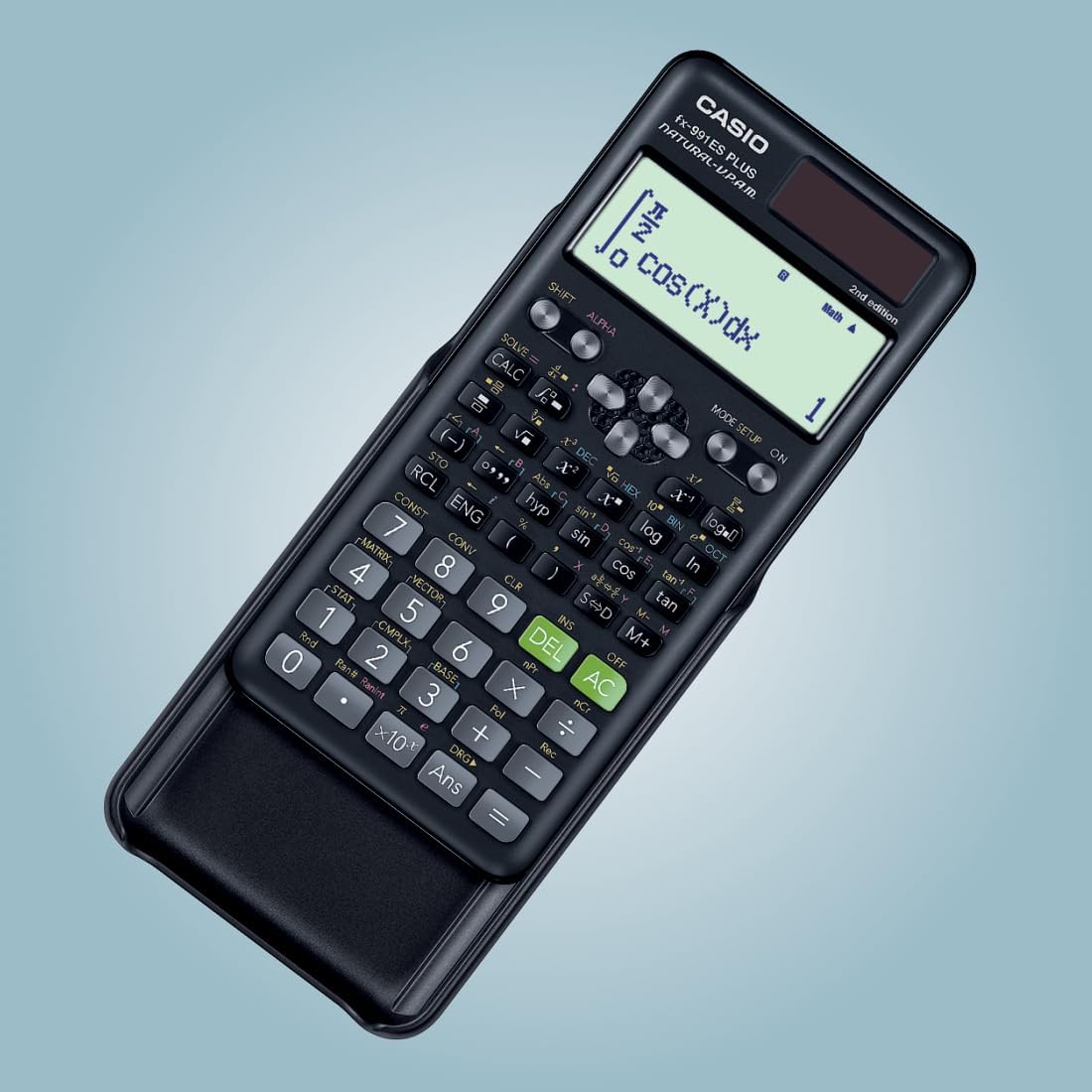
Casio FX-991ES Plus
The professional-grade scientific calculator with 417 functions, natural display, and solar power. Perfect for students and professionals.
View on Amazon